


01 Mar What Actually Happens If You Don’t Store Items Properly?
Most people assume their loft, garage or garden shed is perfectly fine for storage. At the start, it usually seems that way. Everything is packed away, out of sight and out of the way.
The issue often only shows months later. Soft furnishings begin to smell slightly musty. Clothes feel damp. Furniture starts to warp. Important papers curl at the edges. Tools develop light rust.
Storage damage rarely happens overnight. It builds slowly through moisture in the air, changing temperatures and poor preparation. That is often when people realise that where and how you store things really does matter and that a more stable, professional storage environment can prevent many of these problems in the first place.
The UK’s Damp Climate and Why It Matters
In the UK, damp is a constant background issue. Our climate is naturally humid. The UK Met Office explains that relative humidity often sits between 70 and 90 percent depending on the season and location. When warm air holding moisture cools, condensation forms on surfaces. Over time, repeated cycles of warm and cold create the perfect conditions for damage. You can read more about humidity here:
https://www.metoffice.gov.uk/weather/learn-about/weather/types-of-weather/humidity
It is not just the moisture itself that causes problems. It is the constant fluctuation in temperature that allows condensation to form again and again.
What Damp Does to Sofas and Soft Furnishings
Soft furnishings are often the first to suffer. Sofas, mattresses and upholstered chairs absorb moisture from the air. If they are stored in a loft or garage without proper airflow, damp can settle inside the cushions and padding.
At first, everything may look fine. Months later, there is a musty smell that does not go away. In some cases, mould spores develop. The NHS explains that mould thrives in damp environments and can affect health, particularly for people with respiratory conditions:
https://www.nhs.uk/common-health-questions/lifestyle/how-do-i-get-rid-of-damp-and-mould/
Even when mould is not visible, odours can settle deep into fabric and become difficult to remove.
The Impact on Clothes and Textiles
Clothing stored in boxes in garages or lofts often absorbs moisture slowly over time. This can lead to yellowing, mildew marks and a stale smell. Leather items may crack as temperatures rise and fall throughout the year.
Plastic wrapping can make this worse because it traps condensation rather than allowing fabrics to breathe. Stable air conditions are far kinder to textiles than fluctuating heat and cold.
Why Wood Furniture Warps
Wood reacts to the environment around it. Timber naturally expands when it absorbs moisture and contracts as it dries out. When humidity levels rise and fall, especially between cold winters and warmer summers, the wood is constantly adjusting. Over time, that repeated movement can cause furniture to twist, bow or distort in shape.
This process is known as wood warping. As explained here:
https://en.wikipedia.org/wiki/Wood_warping
Changes in moisture content affect how wood behaves, and uneven drying or damp exposure can lead to warping, splitting, loosening joints and lifting veneer.
Garages are particularly high risk because they tend to follow outside weather conditions very closely, meaning furniture inside is exposed to the same temperature and humidity changes throughout the year.
Paper, Books and Important Documents
Paper, books and other materials are sensitive to changes in humidity and temperature. Fluctuations cause expansion and contraction, encourage mould growth and speed up deterioration, which is why stable, controlled environments are recommended for long term storage. You can read more about how humidity and temperature affect preservation here: https://en.wikipedia.org/wiki/Preservation_(library_and_archive)
Electronics and Hidden Damage
Electronics may appear solid, but they are not designed for damp environments. Moisture can corrode internal components and circuit boards even if the outside looks dry.
Batteries can leak and connections can fail. Often, the damage is gradual and only becomes obvious when the item no longer works months later.
Why Lofts and Garages Are Higher Risk
Many people assume their loft or garage is suitable for long term storage. The issue is not space. It is temperature fluctuation and trapped moisture.
In winter, cold air settles and surfaces cool quickly, creating condensation. In summer, heat builds and humidity rises, especially if ventilation is limited. That cycle repeats year after year and slowly affects stored belongings.
How to Reduce the Risk of Damage
Good storage starts with preparation. Items should always be clean and fully dry before being packed away. Furniture should not be wrapped tightly in plastic because this can trap moisture. Breathable covers allow air circulation.
It also helps to raise items slightly off the floor and leave space between boxes so air can move around them. Stability and airflow are more important than many people realise.
When Climate Controlled Storage Makes Sense
For items that are sensitive to moisture and temperature changes, a stable environment can make a significant difference.
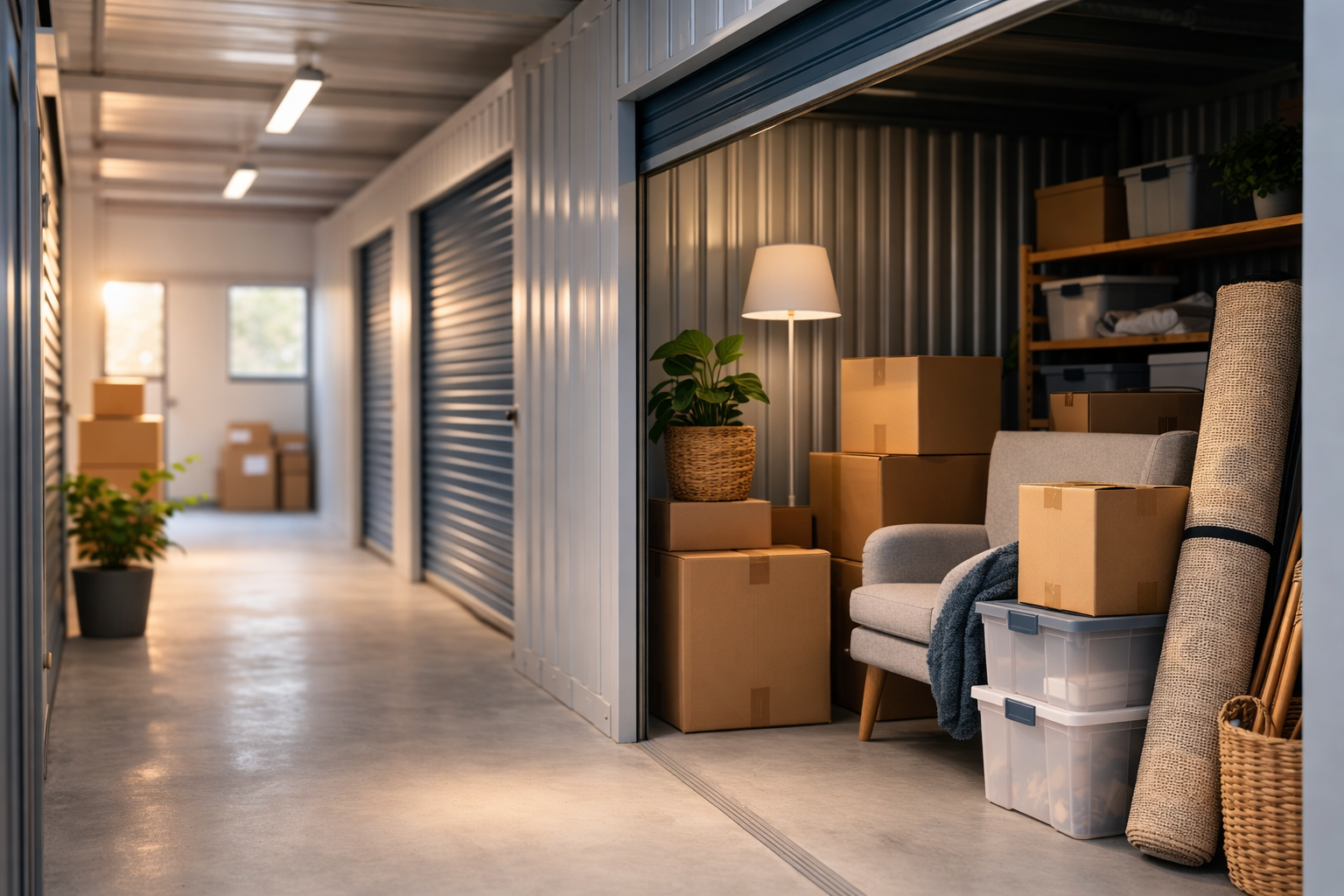
Indoor units at Reddistores are kept inside a climate controlled environment. This means a more consistent atmosphere throughout the year with fewer extreme changes in temperature. For furniture, soft furnishings, clothing, documents and electronics, that stability reduces the risk of condensation, mould and material movement.
If you are storing valuable, delicate or sentimental items long term, controlled conditions offer added protection.
When Outdoor Storage Is Still Suitable
Not everything requires heating. Some items are less sensitive to temperature variation. Tools, garden equipment, building materials and certain types of business stock can often be stored perfectly well in a secure outdoor container.
Our outdoor containers at Reddistores are sealed, secure and protected against damp and mould. They are simply not heated. For many customers, that is entirely suitable. The important thing is matching the storage environment to what you are storing.
The Bottom Line
Damage from poor storage rarely happens overnight. It builds slowly through moisture, temperature swings and lack of airflow.
Once you understand what causes the problem, it becomes easier to prevent it. Whether you choose a loft, garage, indoor climate controlled unit or outdoor container, the key is understanding what your belongings need. Some items require stable conditions. Others simply need to stay dry and secure.
Making the right choice at the start can help protect your belongings for years to come.
Email: info@reddistores.co.uk
Tel: 01527 62308
Follow us on Facebook for tips, ideas and the latest from Reddistores.
No Comments